

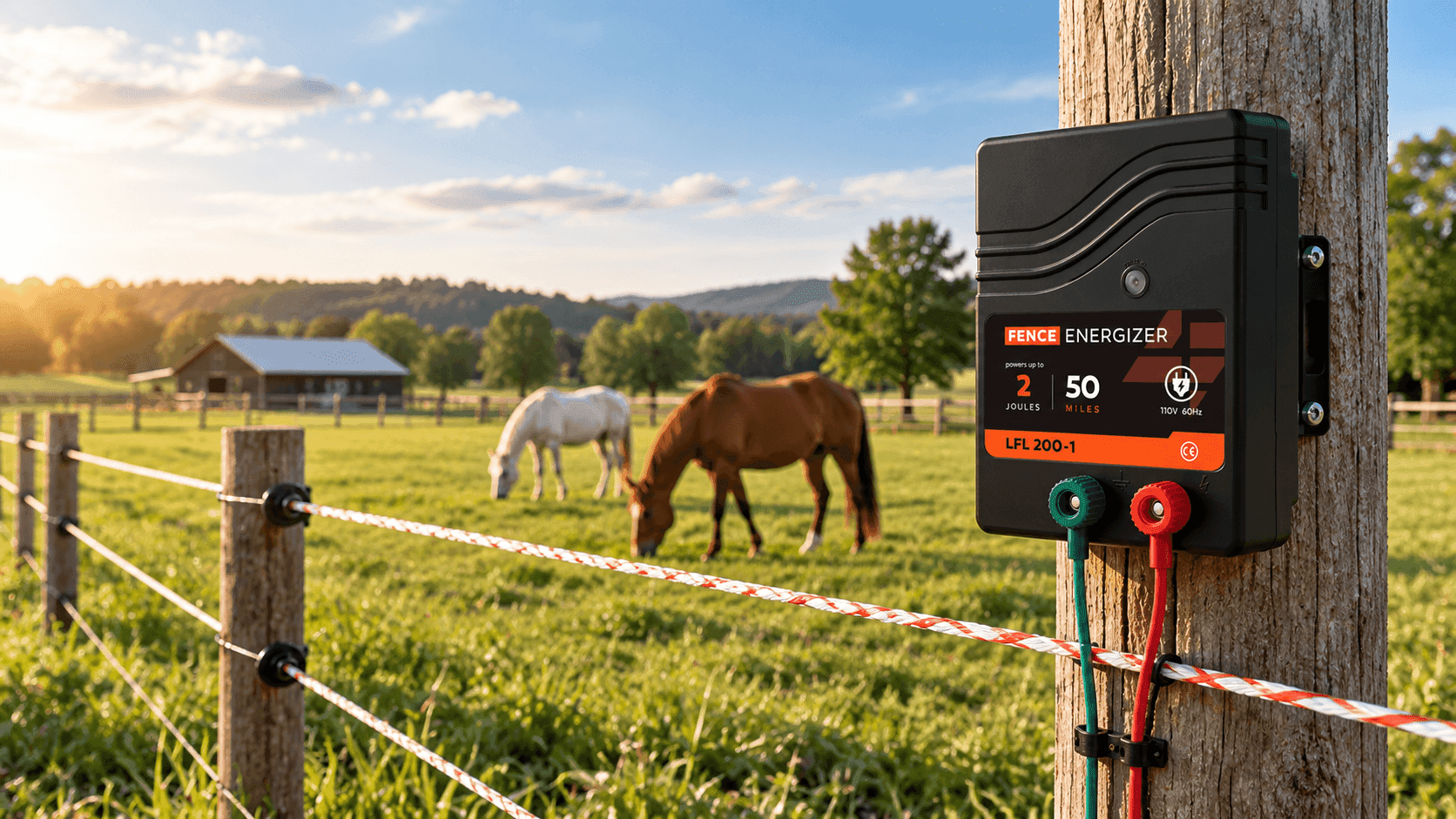
How to Choose the Right Electric Fence Energizer for Different Fence Types
Introduction
Two fences of the same length can need very different energizers. A short section of electric fence netting may put more load on a system than a much longer single strand of wire, while grass touching the fence can change the situation again. So when you choose an electric fence energizer, fence length is only part of the answer. You also need to look at what the fence is made of, how many conductors it has, and where it will be used.
1. Don't Choose an Energizer by Fence Length Alone
It is tempting to look at the distance printed on an energizer and choose a model from that number. On a real farm, things are rarely that simple.
A clean, well-installed single-wire fence is relatively easy to energize. Add several strands, long sections of polyrope, wet vegetation, gates, and multiple connections, and the electrical load increases.
This explains why a fence charger that performs well on one property may feel underpowered on another fence of roughly the same length.
Use fence length as a starting point, not the whole calculation.
2. Polywire Works Well with Portable Fence Systems
Polywire is common in rotational grazing because it is light, easy to handle, and quick to move.
You will often see it used with plastic step-in posts or pigtail fence posts for cattle and temporary paddocks.
For a short, clean polywire fence, you may not need a particularly high-output energizer. The situation changes when you run several strands or extend the fence over a larger grazing area.
Also check the conductive strands inside the polywire. Resistance varies between products, and that affects how much voltage remains at the far end of the fence.
If portability matters, a battery or solar fence energizer can be a practical match for this type of setup.
3. Polyrope Needs Good Conductivity Over Distance
Polyrope is thicker and easier for animals to see than polywire. That makes it useful for horses and other applications where visibility matters.
But not all polyrope conducts electricity equally well.
Look at the number and material of the conductive filaments rather than judging it by rope thickness alone. On a longer fence, a high-resistance conductor can cause a noticeable voltage drop between the energizer and the end of the line.
Before choosing your energizer, calculate the total length of energized rope, including every strand. A 1 km paddock with three electrified strands does not create the same load as a single 1 km conductor.
4. Polytape Has Different Demands
Polytape is easy to see, which is one reason it is widely used for horse fencing.
The wide tape itself does not tell you how conductive it is. Conductivity comes from the metal filaments woven into the material.
For a small horse paddock, the load may be relatively manageable. Longer runs need more attention to conductor resistance, connections, and energizer capacity.
Wind is another practical issue with tape. If the fence becomes loose and repeatedly contacts a post, vegetation, or another object, you can lose voltage even though the energizer is working normally.
Keep the tape tensioned and check the connections regularly.
5. High Tensile Wire Is Different from Polymer Conductors
High tensile electric fence wire is often chosen for permanent livestock fencing.
Metal wire generally offers lower resistance than many polymer conductors, making it suitable for longer fence lines. A properly installed high tensile system can carry a pulse efficiently over considerable distances.
That does not mean you can ignore fence load.
Several energized strands, heavy vegetation, poor connections, or a weak grounding system can still reduce performance.
For large permanent installations, it makes sense to choose an energizer with some capacity left over rather than sizing the unit right at the expected load.
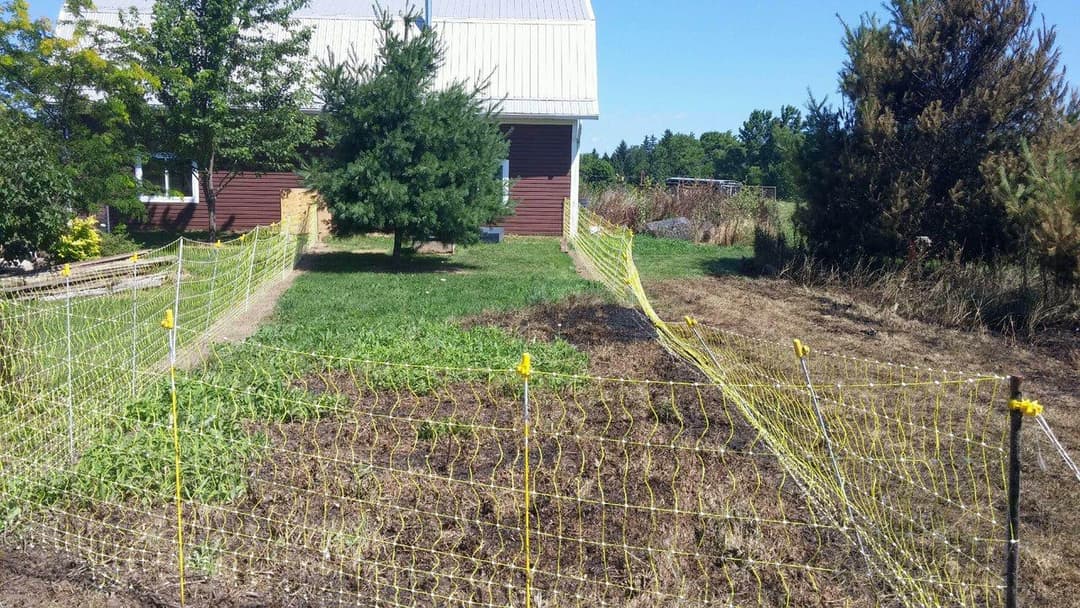
6. Electric Fence Netting Can Create a Higher Load
Electric fence netting deserves special attention.
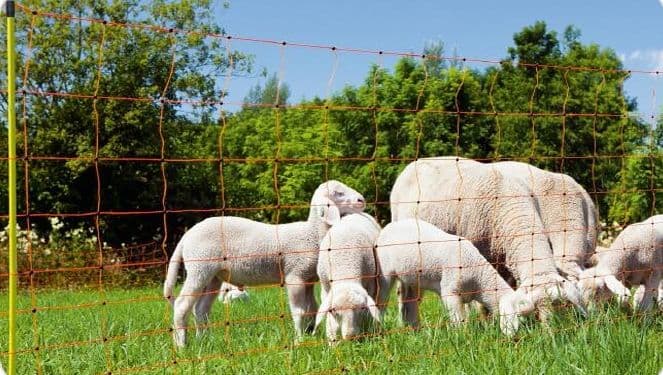
Instead of one or two conductors, a net contains many horizontal conductive lines connected across the fence. That gives you a useful physical and electrical barrier for sheep, goats, and poultry, but it also means the energizer has more fence to power.
Connect several rolls together and the load grows quickly.
Vegetation makes this even more noticeable because the lower parts of the net are close to the ground. Grass touching multiple points along the net can pull down fence voltage.
If you plan to use several rolls of electric fence netting, choose the energizer based on the complete netting system rather than the straight-line distance around the enclosure.
7. Count Every Energized Strand
Here's an easy mistake to make.
Imagine your paddock is 500 meters around. You might describe it as a 500-meter electric fence.
If you install four energized strands, however, you actually have about 2,000 meters of conductor in the system.
The same idea applies to larger paddocks and perimeter fencing.
When comparing electric fence energizers, calculate how much energized conductor you are actually asking the unit to power. This gives you a much more realistic picture of the fence load.
8. Think About Vegetation Before Choosing the Output
A fence installed across clean, dry ground is very different from one running through fast-growing pasture.
Every time grass, weeds, or branches touch an energized conductor, some energy can leak away.
If you know vegetation will be difficult to control, give yourself more energizer capacity. Don't size the system as if the fence will stay perfectly clear all year.
This matters particularly with electric fence netting because its lower conductive lines are naturally closer to vegetation.
Trimming still matters. A larger energizer should not become an excuse to let the fence line disappear into weeds.
9. Match the Power Source to the Location
Once you know roughly how much fence load you have, think about where the energizer will actually be installed.
An AC electric fence energizer makes sense when mains power is available close to a permanent fence. You do not need to worry about solar charging or routinely moving batteries.
Remote paddocks are different.
A solar fence energizer can be much easier to install where running mains cable is impractical. Battery-powered models also work well for portable systems and rotational grazing.
The power source does not replace the need to size the energizer correctly. A solar unit still needs enough output for the fence connected to it.
10. Leave Room for Future Fence Expansion
Farm fencing tends to change.
You may add another paddock next year, connect more electric fence netting, or change a two-strand fence into a four-strand system.
If your energizer is already working close to its practical limit, every addition makes it harder to maintain good voltage.
Think about what the fence may look like in a year or two. Choosing some extra capacity at the beginning can be easier than replacing the energizer after every expansion.
There is no need to buy the largest model available. You just do not want a system with no margin at all.
11. Check the Grounding System Before Blaming the Energizer
You can choose the correct energizer and still end up with a weak fence.
Grounding is often the reason.
The electrical pulse needs a reliable return path through the soil. Loose ground connections, inadequate grounding rods, or very dry ground can weaken the shock animals receive.
Small fence systems may work with a simpler grounding arrangement, while larger energizers and longer fences generally need a more substantial system.
If fence performance is poor, test the grounding system before assuming you need a more powerful energizer.
12. Test the Finished Fence, Not Just the Energizer
Specifications help you choose a model. A fence tester tells you how the finished system is actually performing.
Once everything is connected, check the voltage near the energizer. Then move further along the fence and test again.
A large drop between two points tells you something is happening in that section. It could be a poor connector, damaged conductor, faulty insulator, vegetation, or another source of leakage.
This is much more useful than simply swapping the energizer for a larger one and hoping the problem disappears.
Conclusion
There is no single electric fence energizer that is right for every fence. A portable polywire paddock, a visible polyrope horse fence, a permanent high tensile fence, and several connected rolls of electric fence netting all place different demands on the system. Look at total conductor length, fence resistance, vegetation, grounding, and the power source available on your farm. Then leave enough capacity for real conditions and possible expansion. Lydite Fence supplies AC, battery, and solar electric fence energizers for different fence systems, along with conductors, fence posts, testers, netting, and related electric fencing accessories.
FAQ
What size electric fence energizer do I need?
It depends on more than the perimeter of your fence. Total conductor length, number of strands, conductor resistance, vegetation, grounding conditions, and future expansion should all be considered.
Does electric fence netting need a stronger energizer?
It can. Netting contains multiple conductive lines and often runs close to vegetation, so several connected rolls can create a higher electrical load than a simple wire fence.
Can I use the same energizer for polywire and polyrope?
Yes, provided the energizer has enough capacity for the total fence load. Check the resistance and total length of the conductor rather than choosing solely by material name.
Is a solar fence energizer suitable for permanent fencing?
It can be, particularly where mains electricity is unavailable. The solar panel, battery capacity, energizer output, local sunlight, and fence load all need to be matched correctly.
Why does my fence have good voltage near the energizer but low voltage at the end?
The loss is likely occurring somewhere along the fence. Check conductor connections, vegetation, insulators, gates, and damaged fence materials, then test the line in sections to narrow down the problem.
Recommended Products







Wuxi, China
Zhihui568, Jianghai Western Road
Wuxi, Jiangsu, China
Head Factory
Area A, Shuangmiao Industrial Park, Wutong Road, Huishan District, Wuxi City, Jiangsu Province, China


