

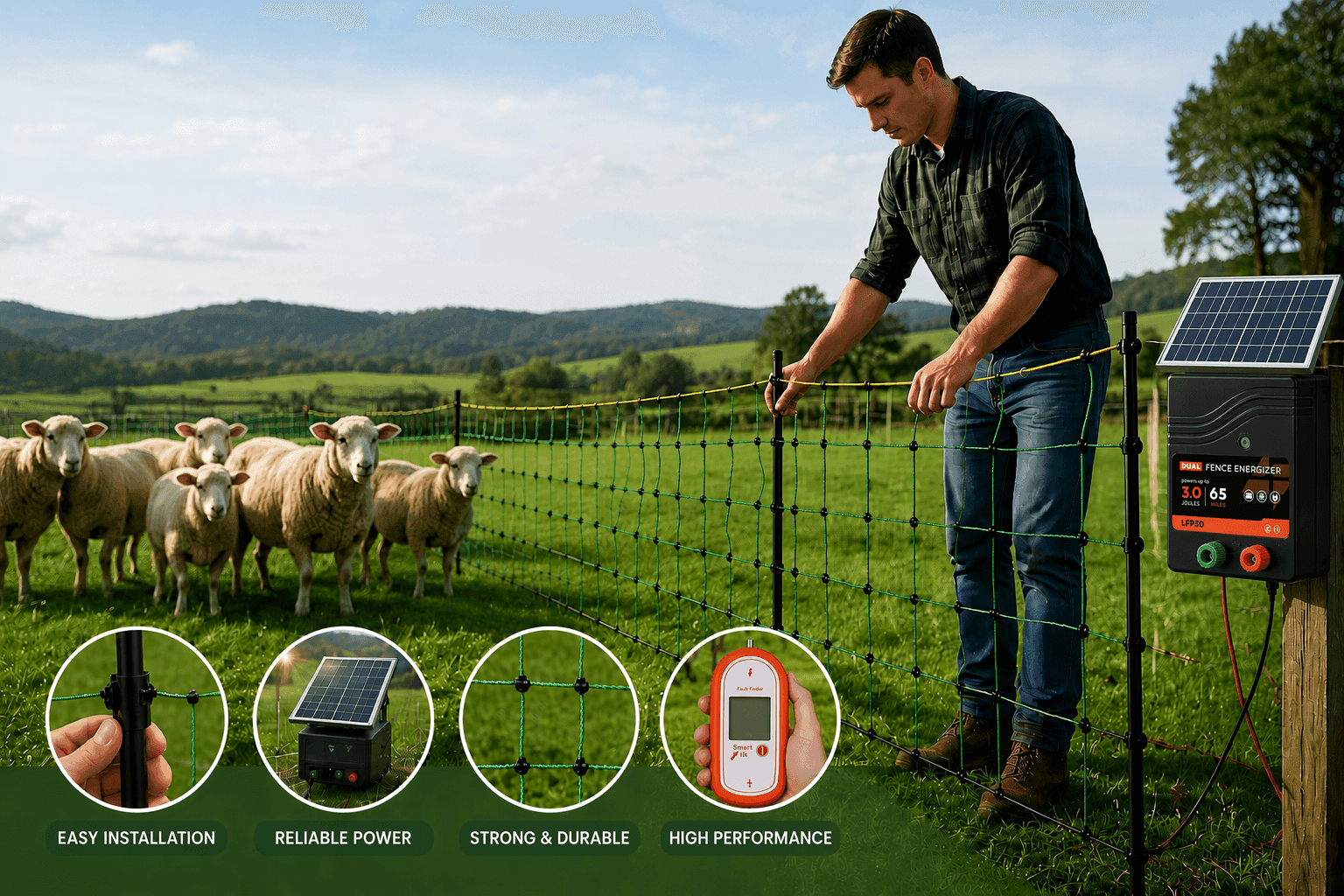
1. Choose the Right Electric Fence Netting
Before installation, selecting the correct electric fence netting is the first step.
Different animals require different fence designs:
- Sheep and goats need strong netting with smaller mesh openings.
- Poultry requires shorter netting to prevent birds from escaping.
- Temporary grazing systems benefit from lightweight and portable designs.
When choosing electric fence netting, consider:
- Fence height
- Mesh size
- Number of conductive strands
- Total fence length
- Animal type
A suitable netting design improves animal control and reduces maintenance.
2. Select a Suitable Electric Fence Energizer
The electric fence netting must be connected to a reliable energizer to work effectively.
Because netting contains multiple conductive strands, it usually creates more electrical resistance than a simple wire fence.
When choosing an energizer, consider:
- Total netting length
- Vegetation around the fence
- Animal type
- Ground conditions
A properly sized electric fence energizer ensures the netting maintains enough voltage to control livestock effectively.
For remote areas, a solar fence energizer is often a practical choice because it does not require access to electricity.
3. Prepare the Installation Area
Before installing the fence netting, prepare the ground area.
Remove:
- Tall grass
- Bushes
- Tree branches
- Sharp objects
Vegetation touching the electric fence netting can reduce voltage and affect performance.
A clean installation area also makes setup easier and improves fence stability.
4. Install the First Fence Post Correctly
The first post determines the stability of the entire fence line.
Place the first post firmly into the ground and make sure it is vertical.
Then gradually roll out the netting while installing additional posts.
During installation:
- Keep the netting straight
- Avoid excessive pulling
- Maintain even tension
Proper installation prevents sagging and improves electrical contact.
5. Connect Multiple Sections of Netting
Large farms often require multiple sections of electric fence netting.
When connecting sections:
- Ensure conductive wires are properly connected
- Use suitable fence connectors
- Avoid loose contact points
Poor connections can create voltage drops and reduce fence effectiveness.
Always check connection points after installation.
6. Install a Proper Grounding System
A strong grounding system is essential for electric fence performance.
The grounding system completes the electrical circuit when an animal touches the fence.
For better results:
- Use galvanized grounding rods
- Install rods in moist soil
- Use multiple rods for larger systems
- Check grounding connections regularly
Many electric fence problems are caused by poor grounding rather than insufficient energizer power.
7. Connect the Energizer to the Fence Netting
After installing the netting and grounding system, connect the energizer.
The basic connection includes:
- Connect the energizer ground terminal to the grounding rods.
- Connect the fence terminal to the netting.
- Turn on the energizer.
- Test the fence voltage.
Always follow the energizer manufacturer's installation instructions.
8. Check Fence Voltage After Installation
Testing voltage is an important final step.
Use a digital fence tester to check:
- Near the energizer
- Middle of the fence
- End of the fence line
If voltage is too low, check:
- Grounding system
- Fence connections
- Vegetation contact
- Energizer capacity
Regular testing helps maintain reliable fence performance.
9. Maintain Electric Fence Netting Regularly
Electric fence netting requires regular inspection to maintain performance.
Check for:
- Broken conductive strands
- Loose posts
- Damaged connectors
- Vegetation growth
- Animal damage
Routine maintenance helps extend the lifespan of the fence system and reduces unexpected failures.
10. Common Installation Mistakes to Avoid
Many electric fence netting problems come from incorrect installation.
Avoid these mistakes:
- Using an underpowered energizer
- Installing without proper grounding
- Allowing grass to touch the netting
- Installing posts too loosely
- Ignoring regular voltage testing
A well-installed system provides better livestock control and requires less maintenance.
Conclusion
Installing electric fence netting correctly requires more than simply putting up the fence. A reliable system depends on the right netting, a suitable electric fence energizer, proper grounding, strong fence posts, and regular maintenance. With the correct installation method, electric fence netting can provide an efficient and flexible solution for managing sheep, goats, poultry, and other livestock. Lydite Fence provides electric fence netting, energizers, fence posts, insulators, and complete fencing accessories designed for farms worldwide.
FAQ
What animals can use electric fence netting?
Electric fence netting is commonly used for sheep, goats, poultry, and other small livestock.
Does electric fence netting need a powerful energizer?
Yes. Because netting has multiple conductive strands, choosing an energizer based on fence length and conditions is important.
How high should electric fence netting be for sheep?
Most sheep netting is designed around 90 cm to 120 cm depending on animal size and application.
Why is my electric fence netting voltage low?
Common causes include poor grounding, vegetation touching the fence, weak connections, or an undersized energizer.






Wuxi, China
Zhihui568, Jianghai Western Road
Wuxi, Jiangsu, China
Head Factory
Area A, Shuangmiao Industrial Park, Wutong Road, Huishan District, Wuxi City, Jiangsu Province, China


